Nansen passport
The Glass RoomThe Nansen passport is a League of Nations refugee document that gives Katalin and Marika a possible route through Europe when they have no ordinary passport, but it cannot secure their safety. Its changing force—from a paper that helps them depart for Switzerland to one treated as grounds for questioning at a German checkpoint—makes the document a measure of how precarious refuge is: a recognized identity can permit movement at one border and fail to protect its bearer at the next.
A document for people without papers
Katalin tells Viktor that neither she nor Marika has papers, except for Marika’s birth certificate. In response, he proposes approaching the refugee office, which issues documents to people in their situation. When he later raises the possibility of bringing Katalin with his family, he names the Nansen passport and says he has already made preliminary inquiries in Prague. He also says the Human Rights League can arrange matters. The passport therefore emerges not as a document Katalin already possesses, but as the practical result of Viktor’s effort to find a way through the administrative barriers facing a stateless refugee.
That effort sits within a wider Europe of new borders and inspections. A returning visitor remarks on the irony of encountering border control where there had previously been none, and describes it as a price of change. For Katalin, the change is more than an inconvenience: without an ordinary passport, travel depends on institutions willing to issue, recognize, and accept a substitute. The refugee document gives that vulnerability a tangible form.
Refugees made visible
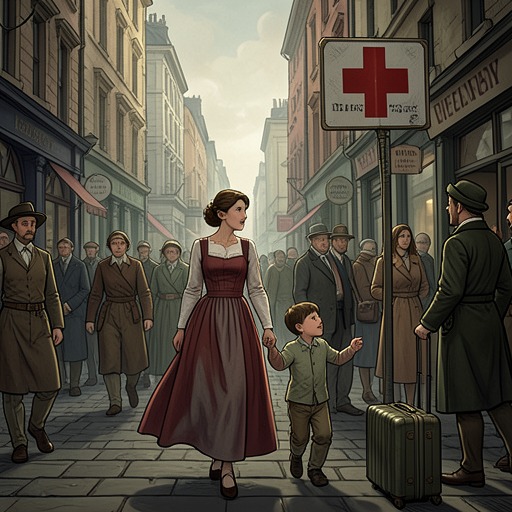
The novel places the passport’s significance against a public display of refugee need. At a committee gathering in the Glass Room, three adults and three children are brought before an audience as though they were performers. Among them are a middle-aged couple and their children, and a woman with a young daughter. The adults and children are scrutinized for their appearance and circumstances; the daughter blushes as people stare, while her mother returns the audience’s gaze with disdain. The scene turns refugees into objects of inspection before the document itself appears in later border scenes.
Katalin’s own dependence on help is shaped by material hardship as well as legal status. She explains that Viktor helped her when she could not find work, pay rent, secure a place to sleep, or buy clothes for her baby. She refuses to express shame for accepting money: those necessities look different when they are uncertain. The passport cannot undo those conditions. It may establish a claim to travel, but it does not erase the economic precarity from which refuge is sought.
Departure under its protection
When Viktor’s family leaves for Switzerland, Katalin and Marika travel with them. At the airport border check, an official glances at their Nansen passports and hands them back without objection. In that moment, the documents perform their intended practical function: mother and daughter can pass with the group, and the family’s departure proceeds. Hana, by contrast, has no passport; she tells the guard that they are only friends, people left behind. The contrast makes the papers’ immediate value plain. They help Katalin and Marika cross where Hana cannot, even as the farewells expose the personal cost of the separation.
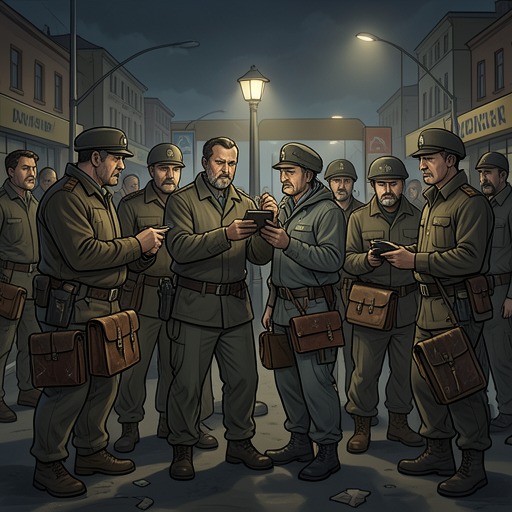
The passport’s acceptance does not settle the family’s status once and for all. On a later journey, at a station where officials inspect passengers and documents, Viktor presents the papers for his family, their nanny, and the nanny’s daughter. The German official disputes the political terminology Viktor uses to describe his origin, then singles out Katalin’s temporary document. Liesel feels Katalin tighten her fingers around her arm. What had been accepted at departure is now a point of scrutiny, and the same paper must withstand a different authority’s judgment.
Recognition without protection
Viktor explains that the document is issued to people without passports and that Katalin is travelling in his employ. The official refuses his intervention, telling him that he was not asked to speak. Katalin can offer only the fact that the Nansen passport is all she has. Though another official examines it alongside the visas, the inspection does not restore her security: a uniformed man takes her by the elbow and leads her to a hut. When Marika cries for her mother, Liesel pulls the child close and says they will look after her, but the official insists that she must go with Katalin.
Viktor protests that Katalin’s papers are in order and that the Nansen passport had been sufficient for entry into France and Spain. The official gathers the family’s documents, labels the separation a procedural issue, and permits the rest of the party to continue. He warns Viktor to move on for his own sake, suggesting the delay may be temporary, but offers no assurance that mother and daughter will return. A young soldier takes their suitcases from the compartment. The family is left with the official’s promise of possible delay and the visible fact of separation.
The passport’s limit
The passport’s recurring significance lies in the difference between documentary recognition and protection in practice. It names Katalin as someone for whom ordinary national papers are unavailable, and it permits her and Marika to travel at one checkpoint. It does not compel officials at another to treat them as secure, nor does it prevent their detention when an authority chooses to question their status. The scenes do not present the document as useless: without it, the escape route may not have been available. Instead, they show how limited its guarantee is.
The border scenes also expose the unequal power built into inspection. The refugees’ movement depends on officials who control the desks, ask for documents, and decide whether those documents count. At the station, the passport is examined within a system where a temporary refugee identity carries less authority than the uniformed officials’ discretion. The document can be carried, displayed, and defended, but its bearer cannot determine what the state will do with it. In this way, the Nansen passport is both a means of escape and an emblem of refuge’s uncertainty: it opens a passage without promising safe arrival.